The ‘ask’ to contribute to our monthly blog was made!
A mix of excitement and fear, while feeling honored that I was asked, was felt, deeply.
At the onset, it was overwhelming—now it just feels like I’m happy to talk and share my experience.
There’s so much to be said, quite a bit has happened.
Quite the learning curve!
Quite the experience.
So, here I am—on the proverbial blog stage with no script—sharing my learning of the impact sector, impact incubators'Incubator' refers to any organization whose programs primarily focus on vetting and selecting, promising social enterprises, and providing them with a comprehensive range of support services aimed at building and growing them to achieve maximum sustainable impact., and Pollinate Impact’s important role within it all.
Since I now lead the vertical on facilitating intentional connections to foster collaboration, I can reflect on my experience organizing both Pollinate Pulse and The Pollinate Potluck.
What has worked in navigating the impact incubation sector over the past seven months?
So how did I get here?
Why did I decide to join Pollinate Impact?
It all began in 2024, when I knew I needed to start a new career path, but I first needed a sabbatical.
What do you mean you took a sabbatical, aren’t you like 25?
Haha—that’s exactly why.
I was in my 20’s, and it felt like I was 40. Caught in this constant cycle of doing, I never had a chance to just be.
But isn’t’ your 20s about chasing the grind and the hustle? At least, that’s what everyone asked..
I mean, yes?!
But only chasing the grind and hustle with things that bring you fulfillment.
I mostly do things that are aligned with my values and where I want to be in life. So I started the year with the intention to learn more about “the other side” of entrepreneurship—the only way I could describe incubation then.
Bearing in mind, I didn’t even know social entrepreneurship was a thing.
One day, I was scrolling through LinkedIn and I noticed that a mutual connection with Pollinate Impact was speaking at their Talent Series with Nexford University. Talent, human resource, people, and culture always spark my curiosity, so I began to follow Pollinate Impact, checked out their website, and even subscribed to the newsletter to understand what they do.
Of course, I didn’t get it.
A couple of weeks later, they released a job application—and I wondered, hmm… “Did the universe align?”
The role they were hiring for was definitely something I could do and had done before.
I applied because I love bringing people together. Events and event management, though stressful, are something I enjoy. Furthermore, a global audience was exciting for me—I really wanted to build on my cultural competency.
So I applied.
And then silence!
After what seemed like an eternity later, I received a welcomed response. They wanted to meet me for an interview.
Even during the interview process, it wasn’t sector-focused or industry-focused, but more about applying my previous experiences to what they were looking for.
What immediately stood out for me at the interview stage was how they themselves, both Shami and Arielle, came across as warm, genuine, caring and understanding.
I completely eased into the process, and in that moment, I knew!
I might not know exactly what I’ll be doing, but I want to do it here, at Pollinate Impact, with this team.
My first sit-down with Arielle was at a café.
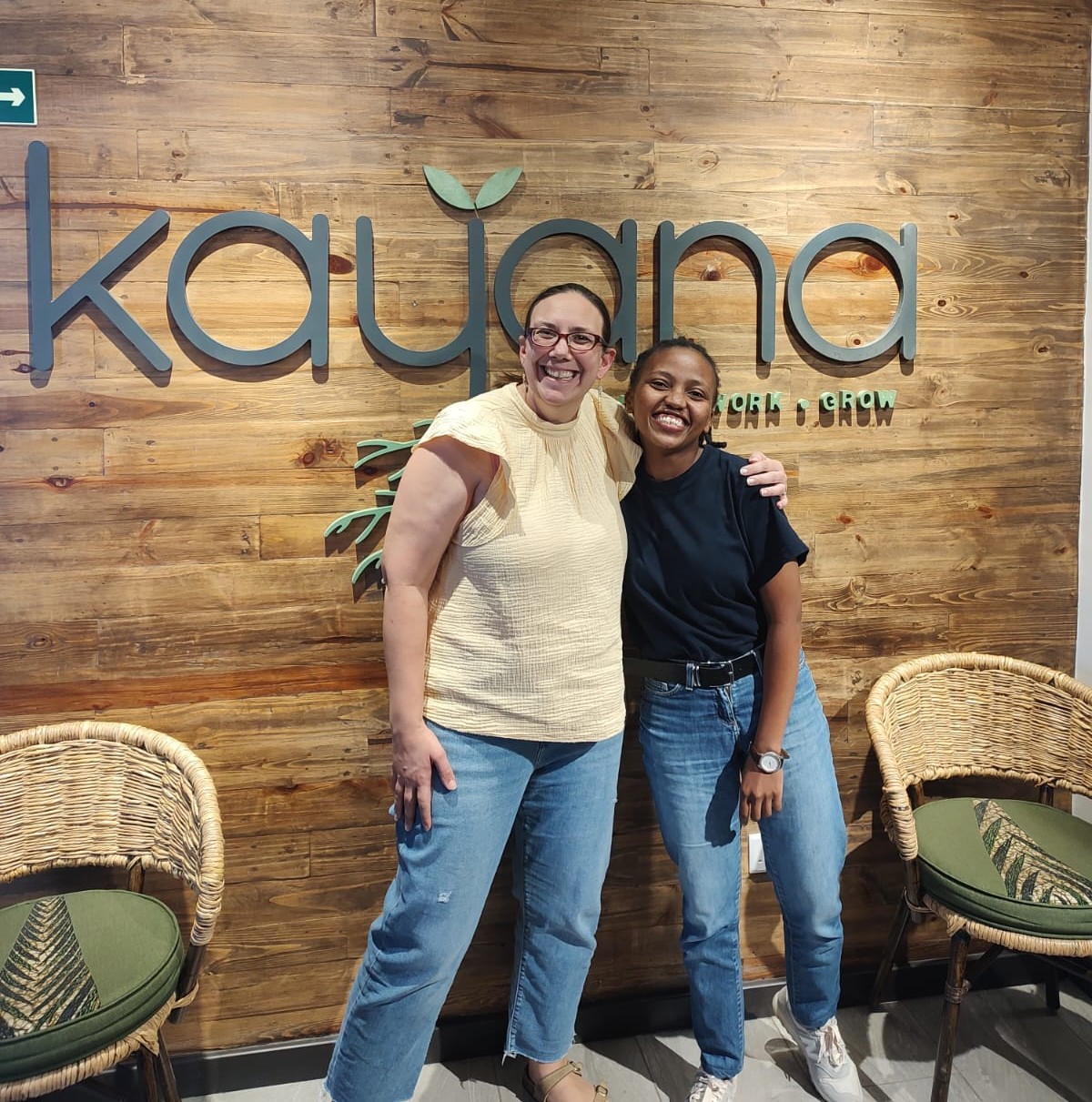
She began mapping out Pollinate Impact’s mission and vision for the impact industry.
She started by first helping me to understand the basis of incubation—how it’s structured and how it’s supposed to work.
Then, through Arielle’s profound experience in the game, she showed me the problem that Pollinate Impact is trying to solve.
I may not have understood all the terms then. In fact, I still have a spreadsheet of new words I learn every other day in my reading.
But I was broadly able to understand what the organization is trying to do.
Every moment since has been about learning and growing—even if it didn’t feel like it at the moment.
From having my hand in almost everything—speaking to members, curating post-session recaps, attending local ecosystem events, attending mixers, organizing mixers both virtually and in person.
It’s been such a learning curve, constantly being out of depth.
I had to hold on to what I could control—me. My personality.
And I love getting to know people, especially outside of work, because then I can connect with them personally, and my output and synergy become better.
And so, I started our team meetings (a team that spans four continents) with these fun check-in questions that helped our team get to know one another more deeply.
Before any meeting begins, we have an icebreaker question.
This moved from virtual calls to our secretariat WhatsApp group, and now the team just loves them.
Doing what I do best helped me navigate moments of doubt when I was still learning the industry and the industry language.
Then we hosted the virtual happy hour with a quiz on random facts, and I saw how people from different backgrounds and geographical locations lit up and bonded over trivia and karaoke.
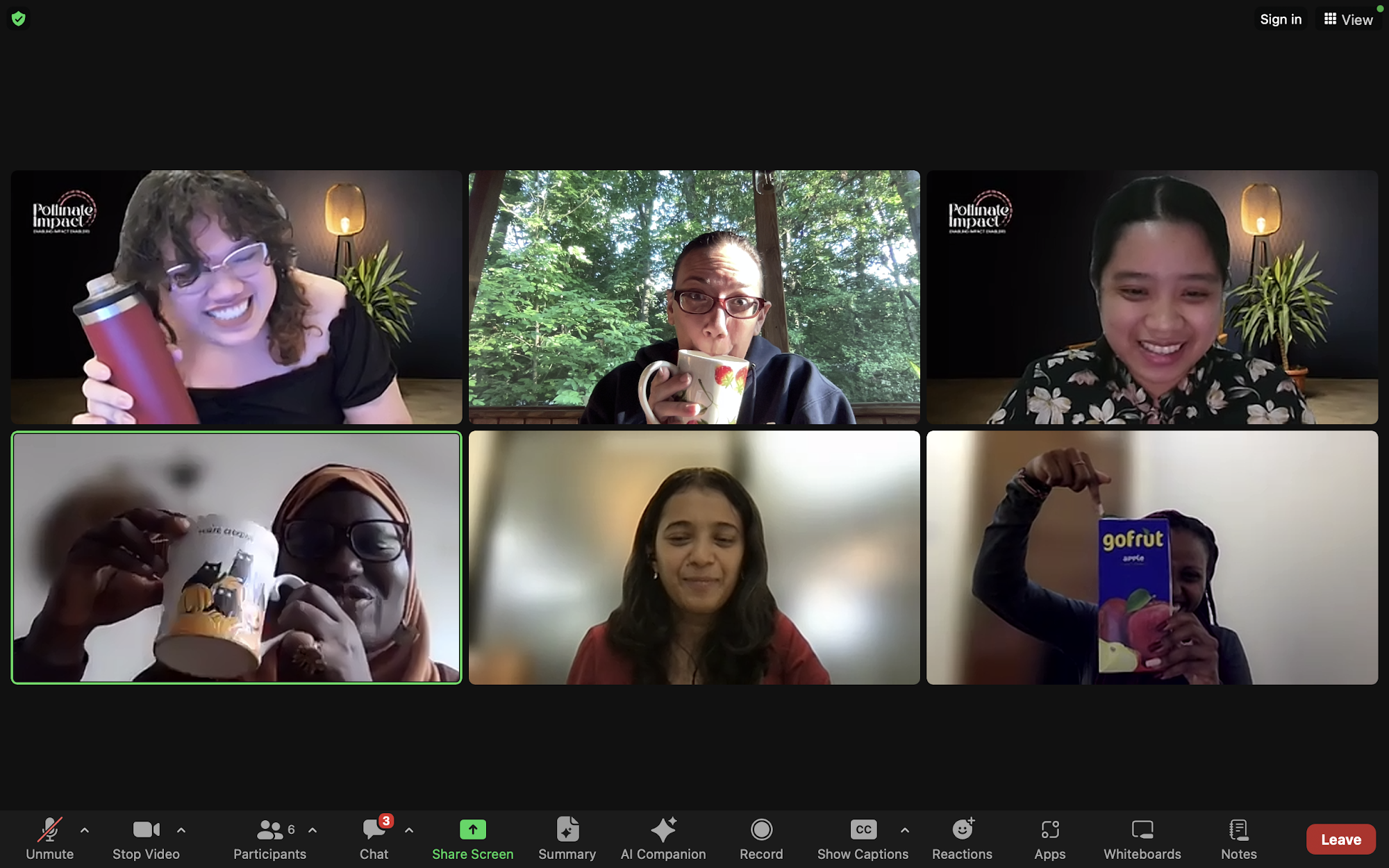
It was interesting to see that people are more likely to work with and collaborate with those they have rapport with, which is often the foundation of building trust. And building trust is what forms relationships and collaborations.
I saw the seeds of Pollinate’s DNA take hold.
A couple of months later, my team suggested hosting a local incubator'Incubator' refers to any organization whose programs primarily focus on vetting and selecting, promising social enterprises, and providing them with a comprehensive range of support services aimed at building and growing them to achieve maximum sustainable impact. meet-up in Nairobi. Since I’m based here, it became obvious for me to lead this initiative.
As a pilot concept, it did what many pilots offer—deep learning that we were able to apply in future planning..
We enjoyed hosting a potluck breakfast, and it set the pace for two other global Pulses—one in Dakar and one in Singapore this February.
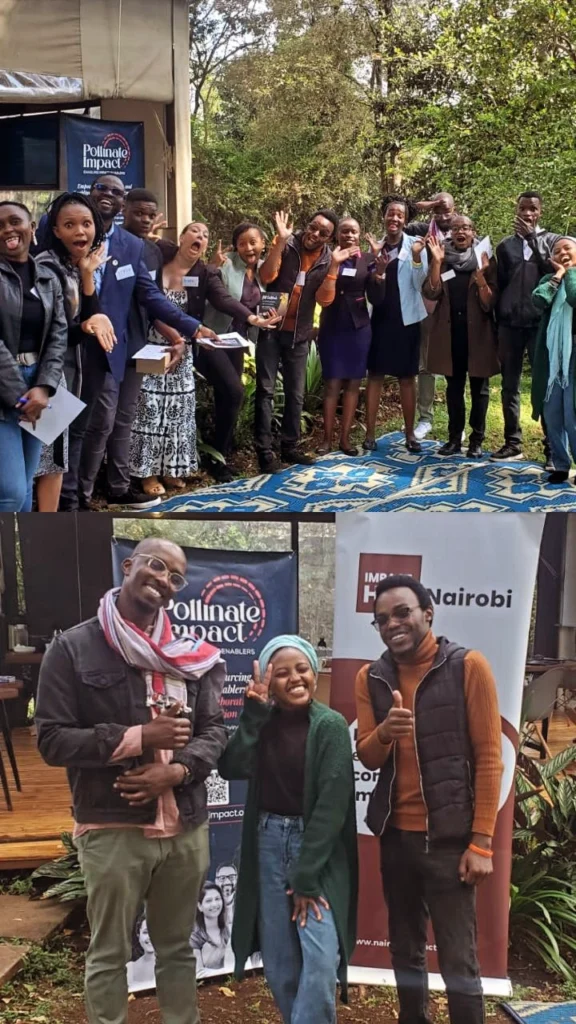
Thinking through the agenda of the Pulse, I asked myself—”if I were invited to this, what would I want to feel and come away with?”
Industry networking has always felt daunting to me, so I created conversation cards to help minimize that often stiff element of talking to people you don’t know, but need to meet:
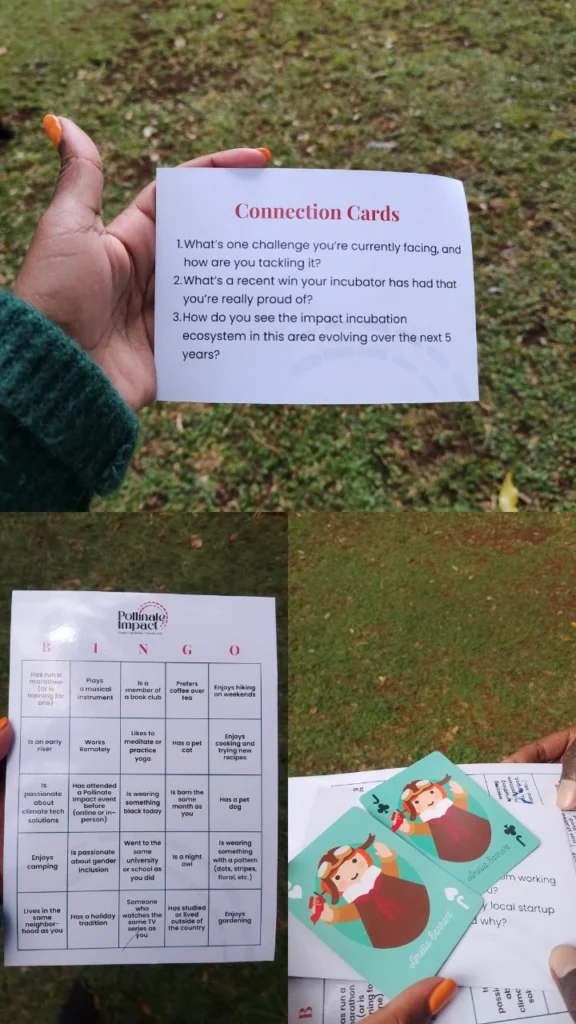
It turned out to be a fantastic idea that had everyone mingling and buzzing with excitement to finish and win some goodies.
The power of co-hosting and allowing our member incubators'Incubator' refers to any organization whose programs primarily focus on vetting and selecting, promising social enterprises, and providing them with a comprehensive range of support services aimed at building and growing them to achieve maximum sustainable impact. to take the front seat was eye opening for me because it reinforced the work Pollinate is trying to do with impact incubators'Incubator' refers to any organization whose programs primarily focus on vetting and selecting, promising social enterprises, and providing them with a comprehensive range of support services aimed at building and growing them to achieve maximum sustainable impact..
It comes with challenges, but it’s through those challenges that we learn and grow.
When you’re new to a sector, the learning curve can feel steep.
The journey is filled with moments of discovery, humility, and growth.
As I reflect on my own experience, here are the themes that have shaped my learning so far:
1. Focus on Your Strength:
Learning takes time, and it often comes with awkward moments. “Embarrassment is the cost of entry. If you aren’t willing to look like a beginner, you’ll never become a master.”
2. Embrace the Learning Curve:
Navigating new content or sector knowledge can feel overwhelming, but leaning into your strengths is a game-changer. Transferable skills from different contexts help create a foundation to build upon as you acquire new industry knowledge.
3. Cultivate Curiosity:
Curiosity has been my compass. Asking questions, reading extensively, and engaging in meaningful conversations build confidence and sector knowledge.
4. Leverage Industry Connections:
Engaging with peers in the same industry sharpens skills, provides a support network, and fosters collaboration.
5. Stay Open-Minded:
Supporting varied roles within Pollinate Impact has helped me understand different departments and how they operate. Flexibility and adaptability have been crucial in deepening my understanding.
Then the offer to go to India was made. Wasn’t really an offer.
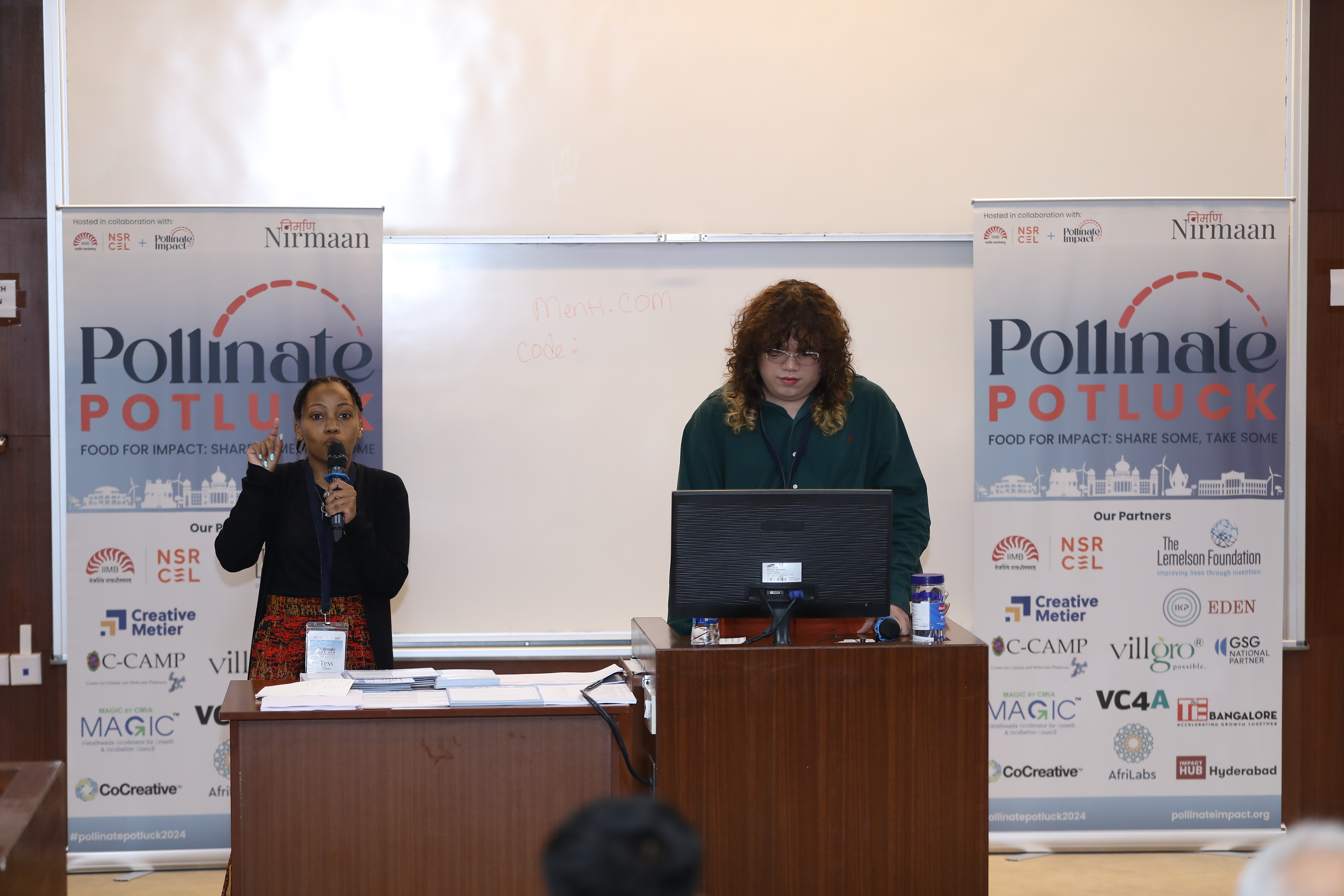

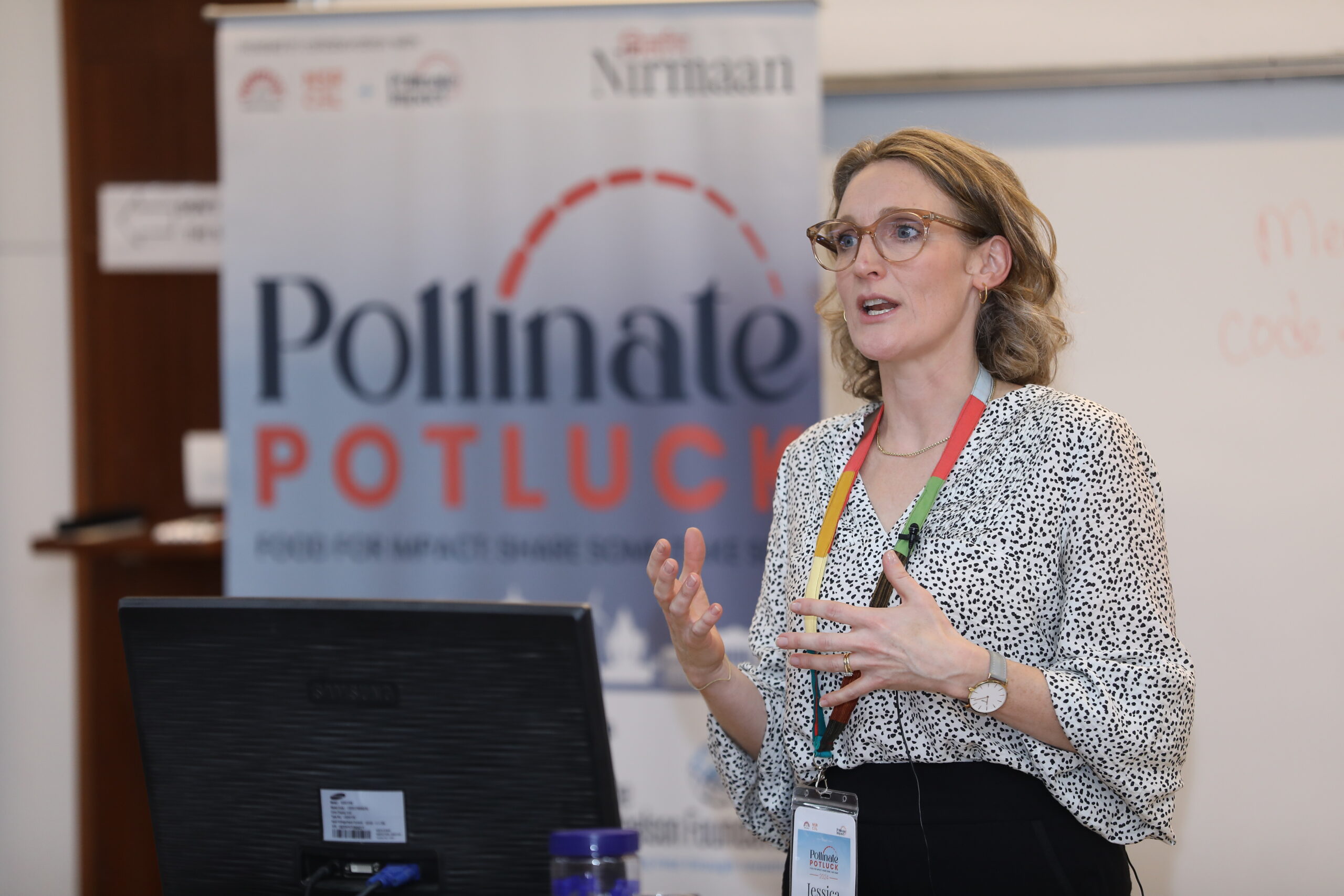
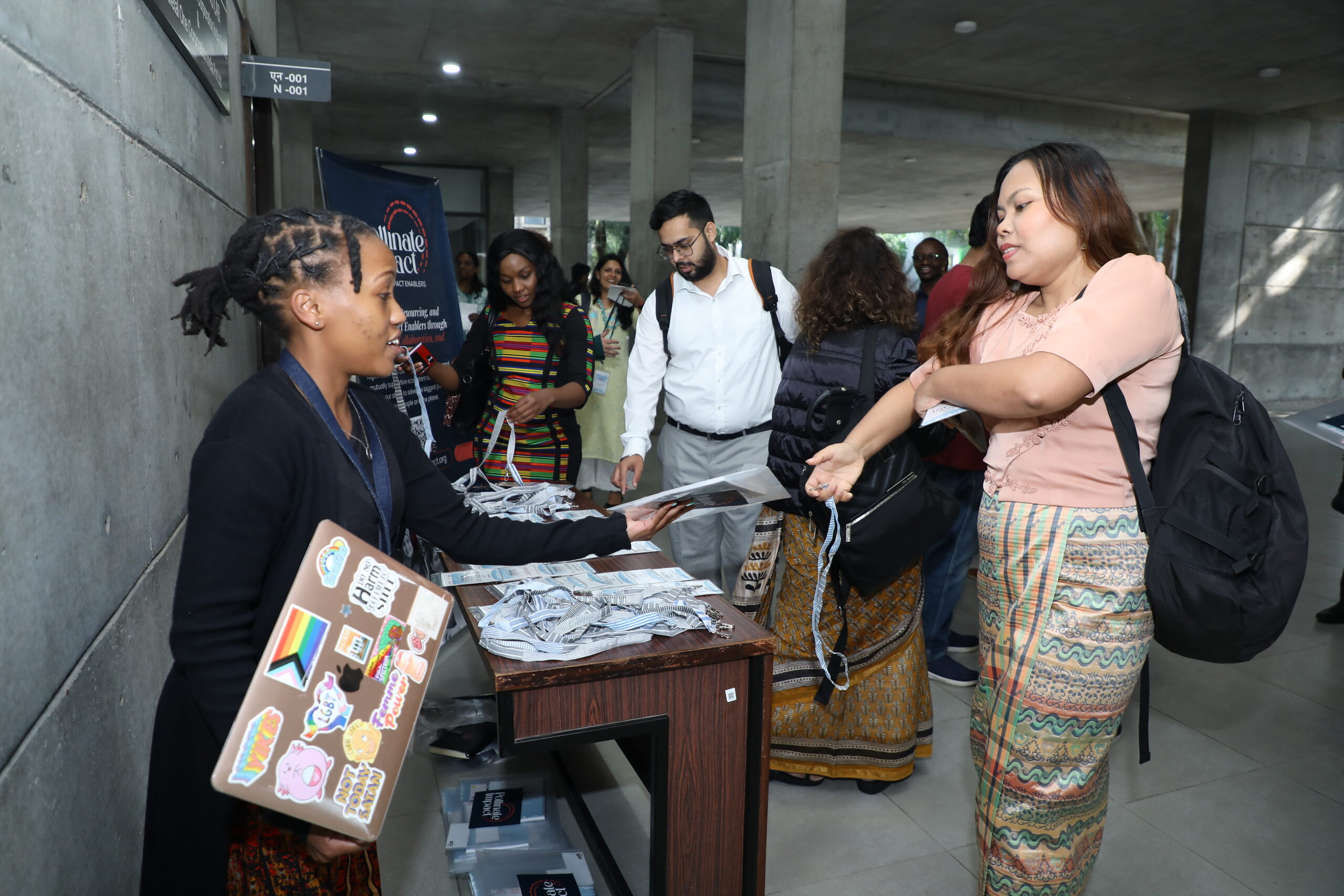
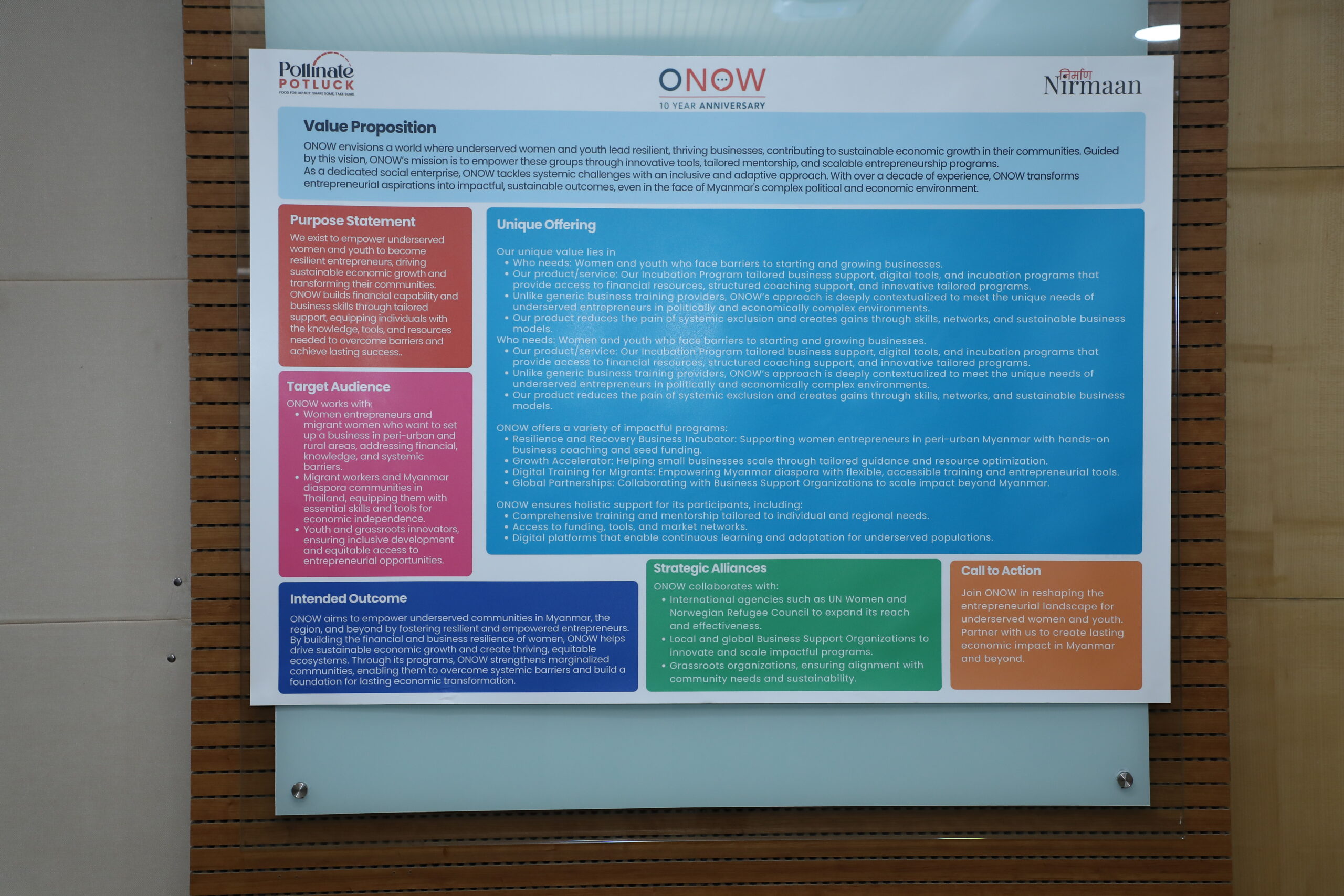
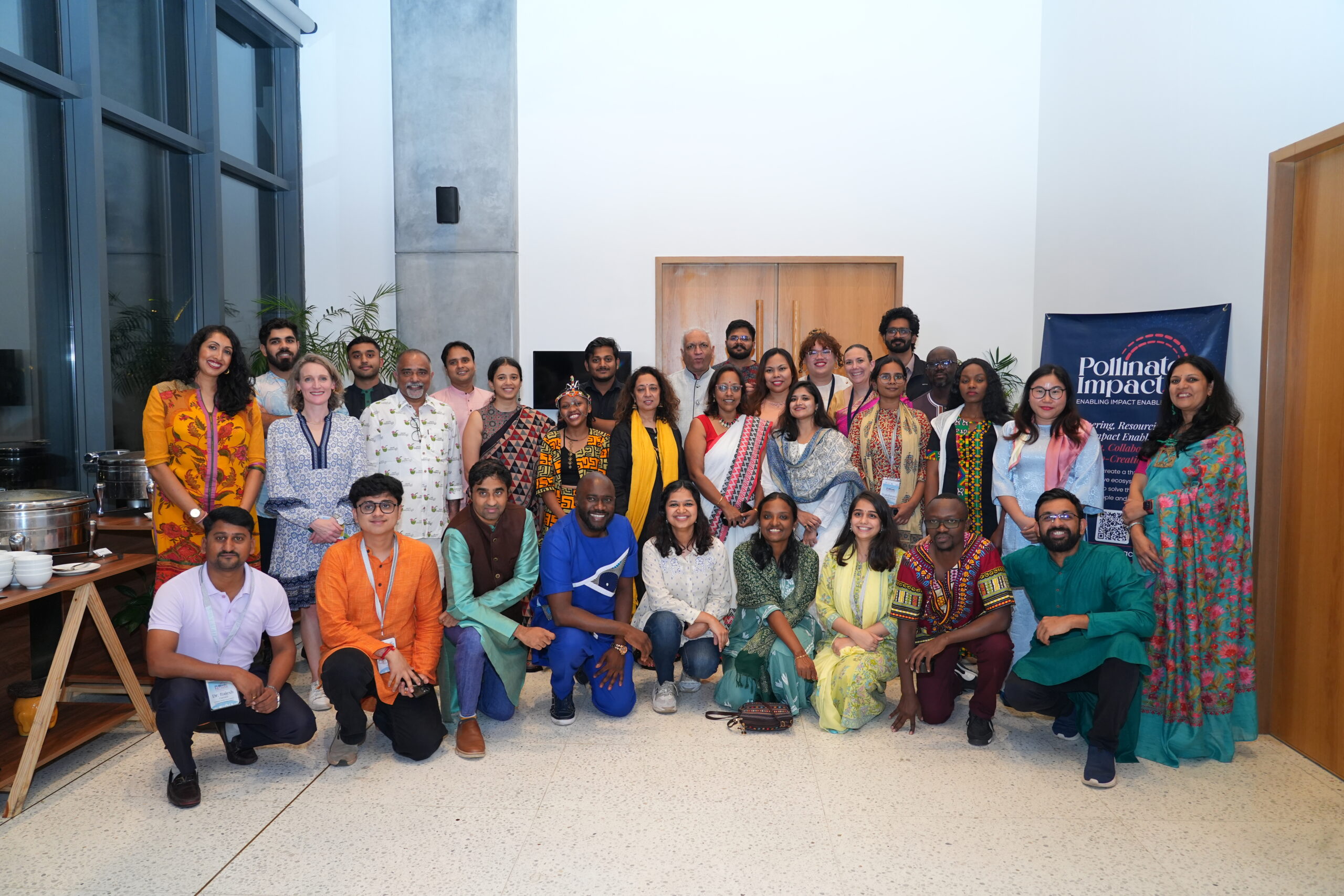

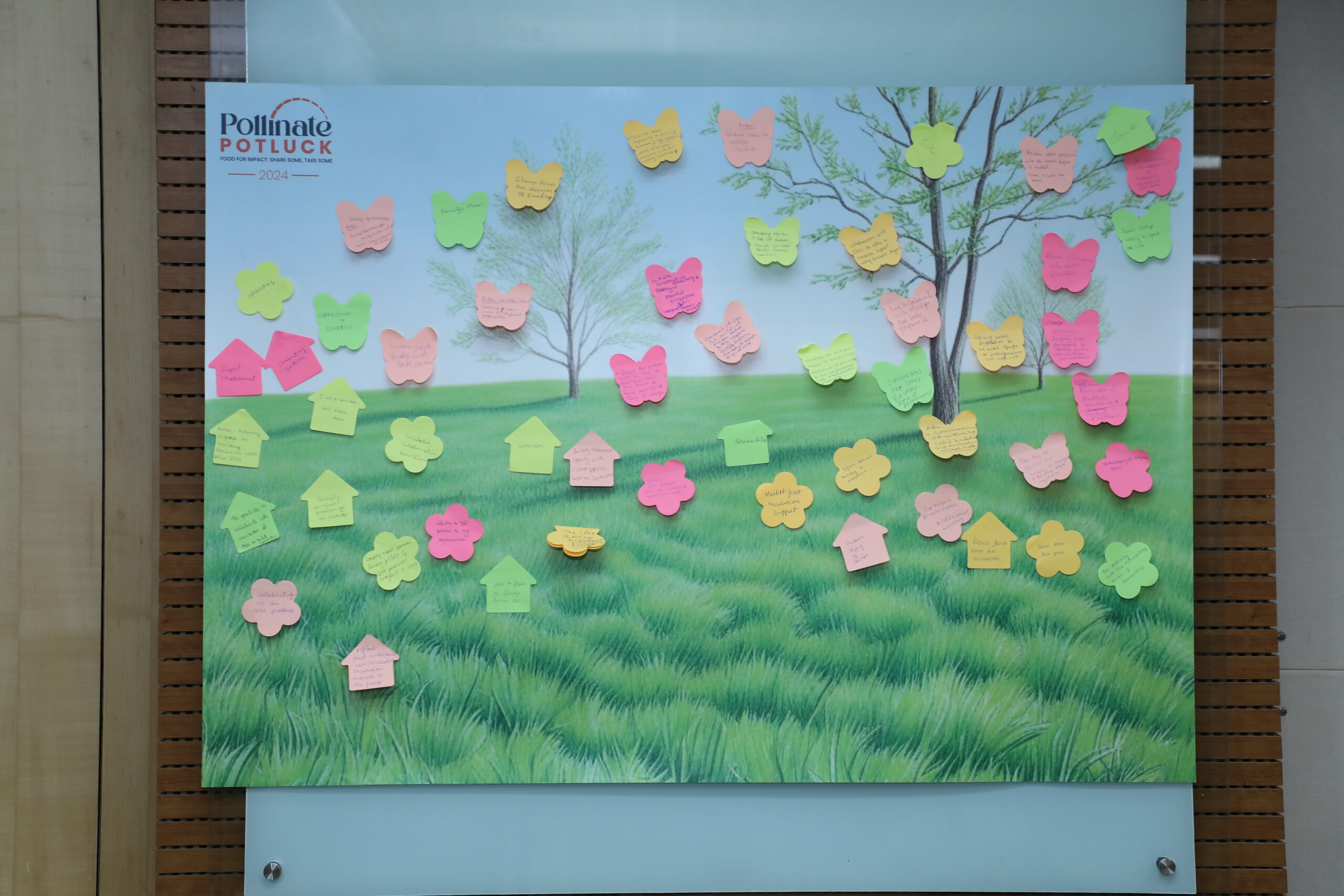
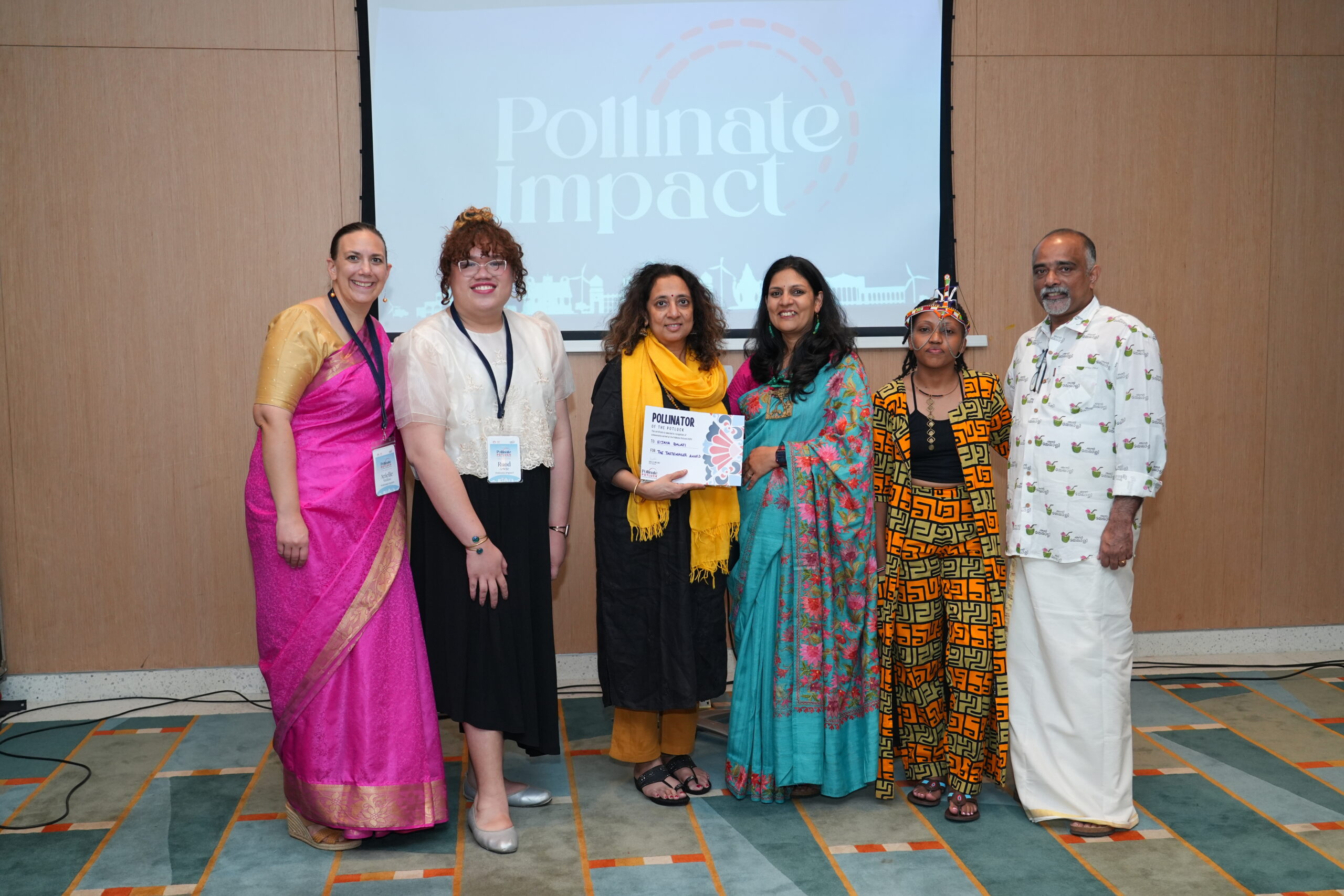
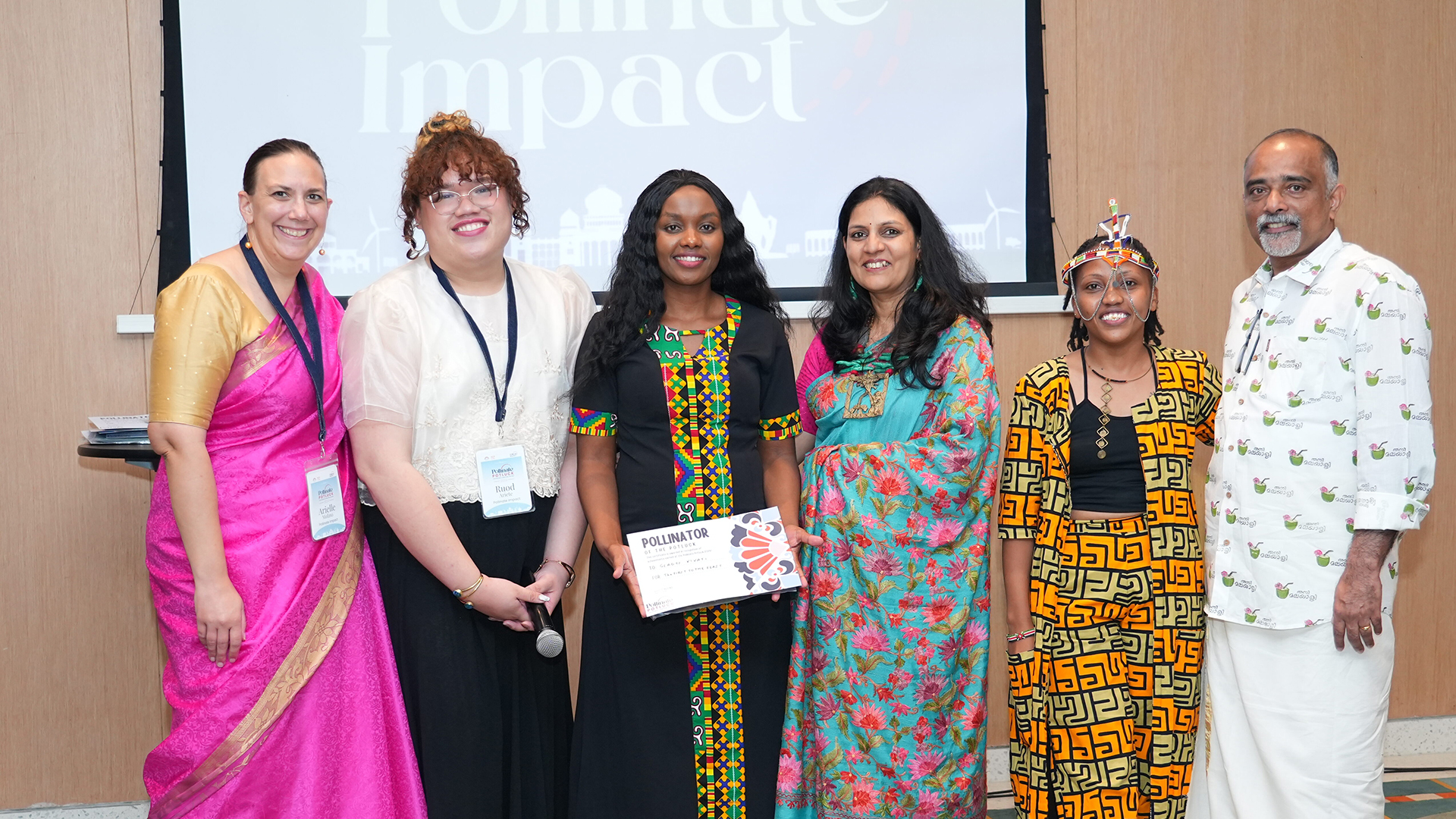
The many activities and sessions at our Pollinate Potluck 2024 were geared towards building relationships and spaces for collaboration.
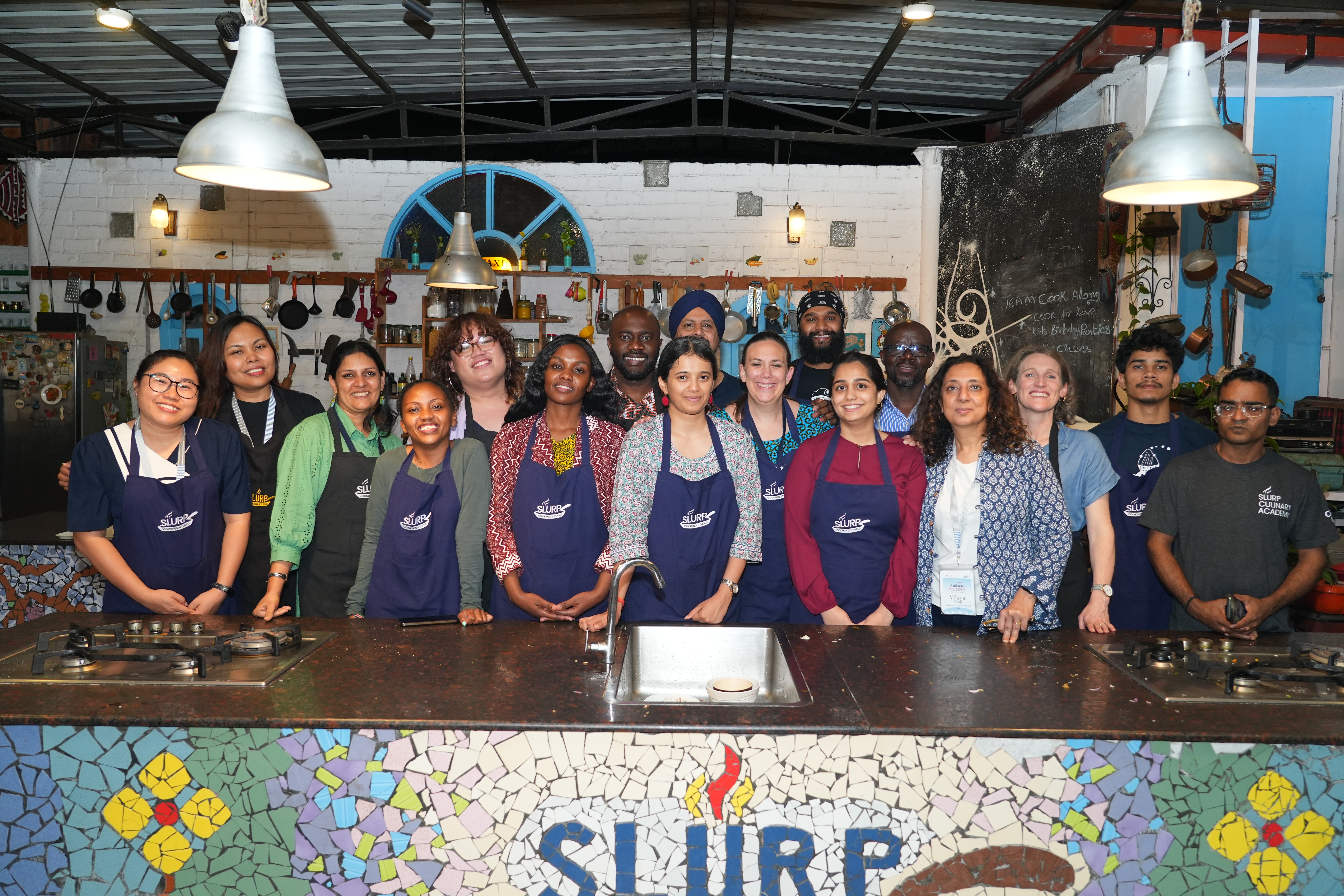
We’re a fairly lean team, and when one of my colleagues fell sick, we became even leaner.
Traveling this way was a new experience—meeting remote colleagues for the first time, navigating a different culture, all while continuing to connect and deliver a one-of-a-kind workshop convening – The Biennial Pollinate Potluck
For me, this convening reinforced two key lessons:
The value of being a participant
Leadership isn’t always about taking charge.
Sometimes, stepping back and experiencing things from a participant’s perspective shapes the kind of leader and teammate you want to become.
The power of small tasks done with heart
Small details matter just as much as the big picture.
Whether a minor logistic or a grand agenda item, putting heart into it creates ripple effects that shape the experience for everyone involved.
Now that I find myself leading the charge on creating meaningful connections to spark collaboration, I can’t help but reflect on how I got here and why the connections pillar feels like – i don’t want to say home .
A while back, I took the StandOut test—something I had never done before.
It described me as a Connector, and for most of 2024, I started noticing how that played out in different areas of my life. While navigating my early months at Pollinate, with my hands in many things, I was encouraged to reflect on my tasks:
- Which ones do I do without thinking?
- Which ones drain my energy?
- Which ones give me energy?
I wasn’t great at keeping track—at least not consciously.
Then, during our team retreat, Arielle mentioned that we’d be diving into different verticals the next day.
That night, back at the hotel, I found myself wondering: How will I know what I want to do? A part of me nudged me to focus on what I enjoy and where I naturally thrive.
After a conversation with Paul Basil, I asked how I should think about making this decision.
His advice? Focus on what you’re interested in growing in, as well as what comes easily to you. That stuck with me. I was torn between tools and resources or facilitating connections. The latter felt more freeing—more like me.
Now, stepping into February with our strategy taking shape, I see why, despite its challenges, this is the pillar I want to pour my efforts into. Connections aren’t just a role—they’re how I move through the world.
And this? This is just the beginning.
In conclusion, stepping into a new sector isn’t just about what you know—it’s about how you approach the journey.
Leaning into your strengths, staying curious, embracing the learning curve, building relationships, and keeping an open mind doesn’t just help you find your footing—
It’s what makes you thrive.
While you’re here, read Shami Rao’s post on Recipe for Inclusive Teams.

Tess Thuo
Tess Thuo is the Network Nurturer at Pollinate Impact.
She is passionate about connecting people and building vibrant communities. With a knack for driving engagement through fun and creative initiatives, she keeps our network lively, relevant, and well-connected. Drawing from her experiences in volunteering and simply being a thoughtful human, she brings new energy to nurture a thriving global network of impact incubators'Incubator' refers to any organization whose programs primarily focus on vetting and selecting, promising social enterprises, and providing them with a comprehensive range of support services aimed at building and growing them to achieve maximum sustainable impact..


